Essential Adult Skills: Budget, Communicate, Verify, Organize

Adulting gets easier when the basics are systemized. This guide focuses on four skill areas that show up daily—money decisions, clear communication, spotting unreliable information, and managing life logistics—so routines feel calmer, choices feel more confident, and progress becomes measurable.
A practical framework: skills, systems, and small habits
Most “adult skills” problems aren’t caused by a lack of intelligence—they happen when responsibilities don’t have a repeatable setup. A simple framework keeps things from slipping:
- Skills: what to do (read a paystub, set boundaries, verify a claim).
- Systems: how it keeps running (templates, checklists, calendars, auto-pay).
- Small habits: short actions that prevent emergencies (a 10-minute money check, a Sunday reset, inbox triage).
Focus on “good enough” consistency over perfect planning. Defaults reduce decision fatigue: one main task list, one weekly reset time, one method for verifying claims, one baseline budget template. Stabilize one area first (cash flow is often the fastest stress-reducer), then layer the next skill.
Adult Skills Map: common problems and the simplest starter system
| Skill area | Common problem | Starter system | Weekly habit |
|---|---|---|---|
| Budgeting | Money disappears between paychecks | 50/30/20 baseline + bill calendar | 10-minute spending review |
| Communication | Misunderstandings and tension | Use clear asks + boundaries script | One difficult conversation practice |
| Media literacy | Confusing or misleading info online | SIFT-style verification checklist | Verify one claim before sharing |
| Life management | Overwhelm and missed deadlines | Single task list + recurring reminders | 30-minute home/admin reset |
Budgeting basics that actually stick
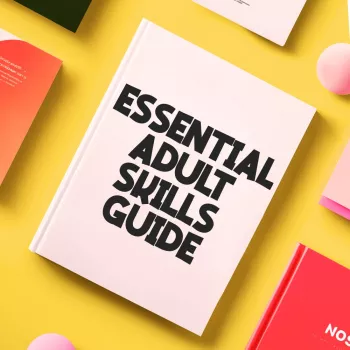
Budgeting gets traction when it starts with clarity, not restriction. Begin by listing income dates (not just totals), fixed bills, minimum debt payments, and true essentials. If you want a straightforward reference to keep on hand, the Essential Adult Skills Guide is designed around repeatable templates and routines so the basics don’t require constant reinvention.
- Use a two-layer plan: (1) a monthly “bills plan” so nothing surprises you, plus (2) weekly spending guardrails for flexible categories like groceries, gas, and fun.
- Add boring automation: auto-pay minimums, automatic transfers to savings, and (optionally) a separate bills account to keep spending money distinct from due-date money.
- Build an emergency buffer in stages: start with $100, then one month of essentials, then 3–6 months over time. A small buffer reduces late fees and overdrafts quickly.
- Plan for irregular expenses: create “sinking funds” for car repairs, gifts, annual subscriptions, medical costs, and fees so they stop feeling like emergencies.
- Pick a debt strategy: pay minimums on all debts, then choose avalanche (highest APR first) or snowball (smallest balance first) depending on what keeps you consistent.
For additional budgeting tools and worksheets, the Consumer Financial Protection Bureau (CFPB) has practical, consumer-friendly resources.
Communication skills for work, family, and roommates
Clear communication prevents expensive misunderstandings—missed rent expectations, vague work tasks, or simmering roommate tension. The goal isn’t to sound formal; it’s to make the next step obvious.
- Use a clear ask structure: context → specific ask → deadline → why it matters. Example: “The utility bill posts Friday. Can you send your half by Thursday night so I can pay on time?”
- Practice reflective listening: summarize what you heard before responding, then confirm the next step. This lowers defensiveness and cuts back-and-forth.
- Boundary script: “I can’t do X. I can do Y. If neither works, it’ll need to wait until Z.” It’s direct without being hostile.
- Repair after conflict: name the issue, own the impact, propose a fix, and schedule a follow-up. Repairs build trust faster than perfect behavior.
- Professional basics: concise subject lines, one topic per message, and action items at the end so recipients don’t guess what you need.
- Pause when activated: draft, wait, then edit for clarity. A 10-minute delay can prevent a week of awkwardness.
For evidence-based relationship and communication guidance, the American Psychological Association (APA) offers a helpful overview of healthy communication patterns.
Media literacy: how to tell what’s reliable (and avoid scams)
Media literacy is a life skill because bad information costs real money and time. A useful default: slow down before reacting or sharing—strong emotion is a common manipulation trigger.
For scam and fraud prevention guidance, the Federal Trade Commission (FTC) maintains up-to-date examples and reporting steps.
Life management: routines that reduce stress and missed deadlines
Putting it together: a 14-day reset plan
A ready-to-use skills reference for everyday decisions
- For daily systems: use the Essential Adult Skills Guide as a practical playbook you can return to when routines slip.
- For travel and cross-cultural moments: keep The Smart Traveler’s Guide to Global Etiquette handy for smoother interactions, tipping norms, and everyday manners abroad.
- For modern relationship logistics: use the Online-Dating Profile Blueprint to reduce guesswork in profiles and first messages while staying authentic.
FAQ
What’s the simplest way to start budgeting if income is irregular?
Base your plan on last month’s take-home pay, prioritize essentials first, and keep a small buffer so you aren’t forced into credit when timing is off. Track weekly and adjust categories as you go, and use sinking funds for predictable irregular costs like car repairs and annual fees.
How can communication improve quickly without feeling scripted?
Use a lightweight structure—context, a specific ask, and a deadline—so the message is clear without sounding formal. Pair it with reflective listening (briefly summarize what you heard) to prevent looping misunderstandings.
What’s a fast method to verify something before sharing it online?
Check the original source, look for credible coverage elsewhere, and confirm the date and context before you share. If an image is involved, use a reverse image search, and avoid acting on posts that push urgency or strong emotion.











Leave a comment