Homework Help Made Easy: Parent Toolkit for Study Habits

Homework Help Made Easy: A Parent’s Toolkit for Strong Study Habits and Independent Learning
Homework runs smoother when kids know what to do, when to do it, and how to get unstuck without a power struggle. The goal at home isn’t a perfect paper every night—it’s a repeatable system that builds confidence, steadiness, and independence. Below are practical routines, simple strategies, and a step-by-step setup that make school nights feel more predictable for everyone.
Start with the real goal: confidence, not perfect papers
When homework becomes a nightly battle, it’s usually because the expectations are unclear (or too high for the moment). A more useful target is confidence—built through consistent behaviors kids can repeat, even on tired days.
- Focus on repeatable behaviors: showing up, starting on time, checking directions, and turning work in.
- Separate “support” from “rescuing”: help your child plan, organize, and clarify instructions, but keep the thinking and writing theirs.
- Define what “done” means at your house: neat enough to read, answers checked, name/date added, and backpack ready by the door.
- Track progress by effort signals (started within 5 minutes, used the checklist, asked a specific question) rather than grades alone.
If you want a quick reference for what healthy expectations look like, the American Academy of Pediatrics has a helpful overview of family routines and homework habits: American Academy of Pediatrics – Homework tips.
Set up a homework routine that reduces friction
Most homework resistance happens before the first problem is even started. A routine lowers decision fatigue and makes “start time” feel automatic.
- Pick a consistent time anchor (after snack, after 30 minutes of play, after dinner) and keep it steady on school nights.
- Create a simple workspace: clear surface, pencil/eraser, charger, scrap paper, and a timer; keep supplies together in one bin.
- Use a “first-then” sequence for younger kids: first 10 minutes of work, then a 5-minute break; repeat.
- Agree on house rules for distractions: phone in a charging spot, TV off, tabs limited, notifications muted.
- Build a 3-minute startup ritual: open planner, gather materials, read directions out loud, set a timer.
Quick routine options by age and attention span
| Age/Stage | Work block | Break | Parent role | Independence goal |
|---|---|---|---|---|
| Early elementary | 10–15 min | 3–5 min | Sit nearby, prompt steps | Follow a simple checklist |
| Upper elementary | 15–25 min | 5 min | Check in at start/end | Use planner and ask for help appropriately |
| Middle school | 25–35 min | 5–10 min | Coach planning, not answers | Prioritize tasks and self-check work |
| High school | 35–50 min | 10 min | Weekly review only | Manage deadlines and study sessions independently |
Teach a simple planning system kids can actually use
A workable planning system should fit on one page, take under two minutes to set up, and tell your child exactly what to do first.
- Use a one-page “Today’s Homework” plan: list tasks, estimate minutes, and choose the first task to start.
- Break big assignments into micro-steps: choose topic → gather sources → outline → draft → revise → final check.
- Add a “stuck plan”: reread directions, highlight key words, try one example, then ask a specific question.
- Practice time estimates as a skill: compare predicted vs. actual minutes to improve planning without shame.
- End with a 2-minute pack-up check: completed work in folder, materials for tomorrow, planner updated.
Homework strategies that build independence (without nightly conflict)
Independence grows when kids feel capable and when help is structured. The goal is less hovering and more coaching—especially when something feels hard.
- Use prompts that keep ownership with the child: “What do the directions say?” “What’s your first step?” “Show me where you got stuck.”
- Try the “least help first” ladder: hint → example → partial solution → full explanation (avoiding doing the problem for them).
- Make checking routines automatic: reread questions, confirm units, underline what was asked, verify steps.
- Pause productively when emotions spike: quick reset (water, stretch, breathing), then return to one small step.
- Use positive boundaries: homework happens before screens; screens are earned by effort routines, not perfect results.
Stress can make homework feel bigger than it is. For practical guidance on study habits and managing school pressure, see: APA – Healthy study habits and managing school stress.
When your child refuses or “forgets”: troubleshoot the cause
Refusal is often a signal, not a character flaw. Instead of repeating reminders, aim to identify the bottleneck and adjust the system.
- Skill gap: if they can’t do it, ask the teacher for a quick reteach plan and practice a few targeted problems.
- Executive function gap: reduce steps with checklists, visual timers, and a consistent start cue.
- Overload: shorten the first work block, prioritize the most important tasks, and communicate with the teacher early.
- Perfectionism: set a “good enough” standard and a time cap; praise attempts and revision, not just correctness.
- Attention or learning differences: document what helps, request school supports, and keep home routines predictable.
A printable toolkit that makes the system easy to repeat
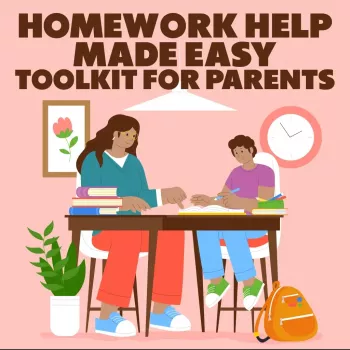
If you want an all-in-one set of pages to get started quickly, try the Homework Help Made Easy Toolkit for Parents – Printable Guide for Creating Study Habits, Homework Strategies & Independent Learning.
For older students who are building independence skills beyond academics—like preparing for school trips or exchange programs—this digital guide can be a helpful add-on: The Smart Traveler’s Guide to Global Etiquette | Digital Download eBook for Cultural Tips, Travel Etiquette, and International Manners.
FAQ
What is the app that helps do your homework for free?
Many apps offer limited free features like scanning problems, making flashcards, or giving step hints, but accuracy and academic integrity vary widely. The safest approach is to use apps for studying and self-checking (practice problems, organization, explanations) rather than tools that generate full answers, and to follow your school’s policy.










Leave a comment