7-Day Self-Love Meditations for Calm, Confidence & Worth
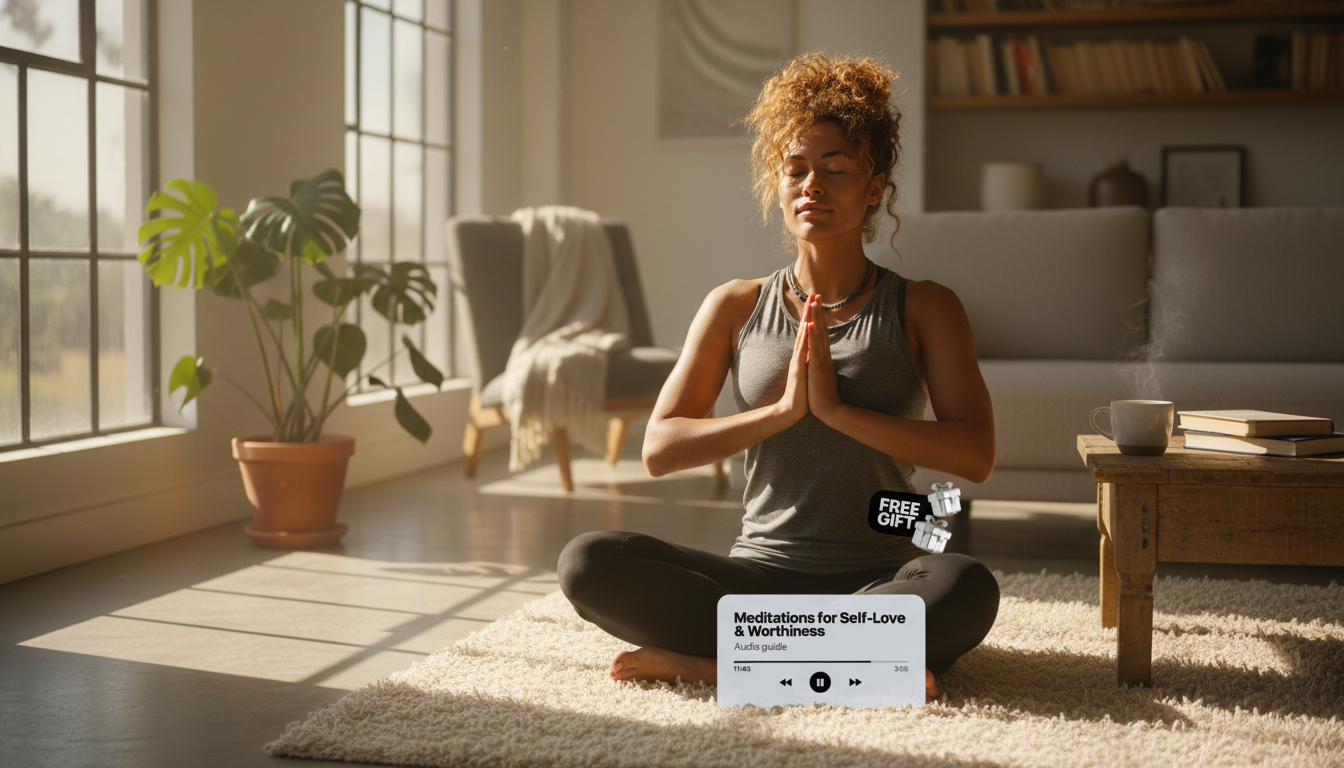
Meditations for Self-Love & Worthiness: Guided Audio Practices for Confidence, Calm, and Inner Healing
Self-love and worthiness aren’t personality traits— they’re skills that can be practiced, especially when the nervous system is stressed or the inner critic gets loud. Guided audio can make the practice simpler: press play, follow along, and let repetition rebuild trust, steadiness, and self-respect in small daily moments.
What “self-love” and “worthiness” can look like in everyday life
Self-love often shows up less as grand confidence and more as consistent self-support—choosing to speak to yourself with basic respect, even when motivation is low or the day didn’t go as planned. It can sound like: “That was hard, and I’m still here,” instead of spiraling into blame.
Worthiness is closely related, but with a different flavor: it’s the internal permission to receive without over-earning. That can mean letting yourself rest, accepting help, taking compliments without deflecting, choosing healthier relationships, or going after opportunities without first proving you “deserve” them through exhaustion.
Common signs the practice is needed include harsh self-talk, people-pleasing, perfectionism, comparison spirals, difficulty setting boundaries, and guilt around rest. A realistic goal isn’t “never feel insecure again,” but fewer emotional crash cycles—and a quicker return to calm and self-respect after setbacks.
Why guided meditations and affirmations work well together
Guided meditation reduces friction. When attention wanders (which is normal), a voice and structure gently bring you back without requiring you to “do it perfectly.” That’s especially helpful on days when you feel scattered, tired, or emotionally tender.
Affirmations add a second layer: they reframe inner dialogue by replacing reflexive criticism with intentional language. Instead of trying to force positivity, the aim is to practice a new default response—one that’s supportive, grounded, and less punishing.
Mindfulness supports both by building emotional tolerance. You learn to notice sensations and thoughts without instantly reacting, which can interrupt familiar loops like overthinking, self-blame, or shutting down. Research-backed resources also highlight mindfulness and meditation as practical tools for stress reduction, including over time with regular practice (see American Psychological Association, NCCIH, and Mayo Clinic).
Most importantly, repetition matters. Short, frequent sessions train the brain through consistency rather than intensity—especially when you’re rebuilding trust with yourself.
What’s included in the audio course and how it supports inner healing
The Meditations for Self-Love & Worthiness audio course is built as a mix of guided meditations, affirmations, and mindfulness practices designed to strengthen self-acceptance in real life—not just during quiet moments.
Confidence-building support comes from grounding, self-trust cues, and compassionate self-talk prompts that help you meet your own experience with steadiness. Instead of asking you to “be confident,” the audio guides you to practice what confidence feels like in the body: a slower exhale, a less clenched jaw, a clearer internal “I’ve got me.”
For calm, the course leans into body-based techniques such as breath awareness, relaxation prompts, and gentle attention training. This matters because self-love is hard to access when your body is stuck in stress mode; calming the system can make kinder thoughts more believable.
For inner healing, the themes focus on releasing shame, softening self-judgment, and reconnecting with a sense of safety. Many people find these tracks especially useful in four windows: morning steadiness, a midday reset, evening decompression, and post-trigger recovery.
If you’re pairing this work with broader personal growth, two complementary tools that can support healthier self-expression and boundaries include the Online-Dating Profile Blueprint (useful for practicing authenticity instead of performance) and The Smart Traveler’s Guide to Global Etiquette (helpful for reducing social anxiety by clarifying expectations across settings).
A simple 7-day listening routine (micro-practice approach)
Starting small keeps the practice sustainable. Short sessions build momentum without triggering resistance, and repetition helps your nervous system learn: “We do this regularly; we’re safe enough to soften.” Try pairing listening with an existing habit like tea or coffee, a short walk, a shower routine, or your bedtime wind-down.
Track one signal of progress—just one. It could be less rumination, a calmer body, kinder self-talk, or easier boundary-setting. And remember the “minimum effective dose”: even one track repeated all week can be beneficial.
| Day | Focus | When to Listen | 1-Minute Follow-Up |
|---|---|---|---|
| 1 | Grounding + safety | Morning or before work | Name 3 things going well today |
| 2 | Gentle self-talk | Midday break | Replace one harsh thought with a neutral truth |
| 3 | Worthiness to receive | Before a task you avoid | Ask for one small help/support |
| 4 | Confidence reset | Before social/work interaction | Stand tall, slow exhale x3 |
| 5 | Calm after stress | After a trigger or conflict | Hand on chest, say one kind sentence |
| 6 | Inner healing reflection | Evening | Journal: “What do I need more of?” |
| 7 | Integration + gratitude | Anytime | List 2 ways you showed up for yourself |
Getting more out of the practice: environment, mindset, and consistency
Who this course can help most (and when to seek additional support)
A practical way to start today
FAQ
How often should guided meditations be done to build self-love and worthiness?
Daily 5–10 minutes is a solid starting point, but 3–5 times per week can still create real change. Consistency matters more than session length, especially when you’re building a new inner baseline.
What if affirmations feel fake or triggering?
Use bridge statements that feel neutral and believable, and start with breath or body awareness first. The goal is supportive language you can actually receive, not phrases you have to force.
Can this be used for anxiety and stress?
Yes—calming practices can help regulate the nervous system, especially when used after stressful moments or as a daily reset. If anxiety is severe, persistent, or worsening, professional support can be an important next step.












Leave a comment