Sleep Reset: 7-Day Guided Audio Plan for Better Sleep
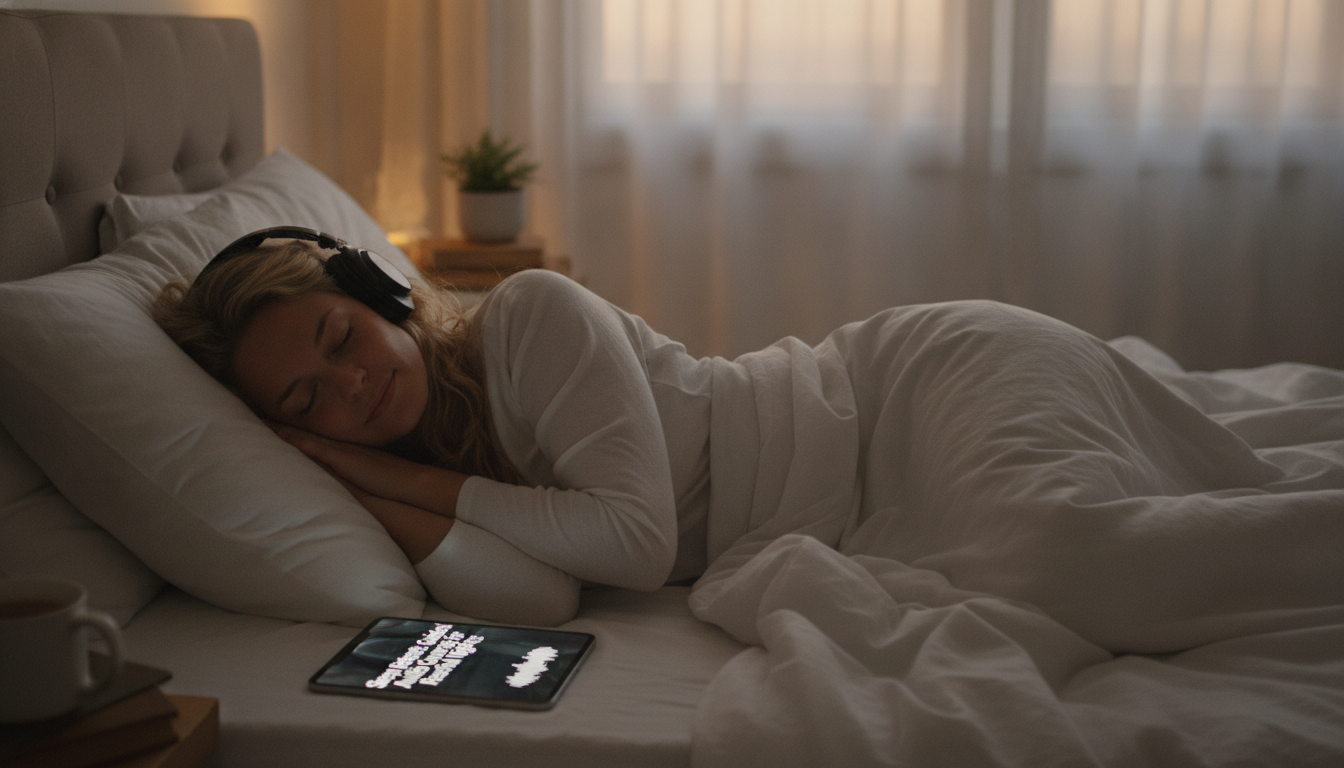
Sleep Reset: A 7-Day Guided Audio Routine for Restful Nights
Restful sleep often comes down to repeating a few calming cues in the same order—slowing breathing, releasing muscle tension, and giving the mind a clear “off-ramp” from worry. A guided audio course builds those cues into a simple daily routine so falling asleep feels more automatic over time. Below is a practical way to use a 7-day sleep meditation and deep relaxation program for insomnia relief, including a day-by-day structure, best-use tips, and what to expect.
Who this guided audio course is for
A guided sleep routine can be especially helpful when the problem isn’t “knowing what to do,” but getting the body and brain to cooperate at night.
- People who struggle to fall asleep because the mind stays busy at bedtime
- Light sleepers who wake up during the night and have trouble returning to sleep
- Anyone seeking a non-stimulating wind-down routine that does not require screens
- Shift workers or irregular schedules who want a consistent relaxation ritual even when bedtime changes
- Beginners who prefer being guided rather than “doing meditation correctly” on their own
If sleeplessness is persistent, it can help to understand common causes and evidence-based options. The National Heart, Lung, and Blood Institute and the American Academy of Sleep Medicine provide clear overviews of insomnia and when to seek clinical care.
What’s included in Sleep Reset (and how it works in practice)
Sleep Reset guided audio course is designed to make winding down feel less like a complicated project and more like a familiar pathway. Instead of forcing sleep, it trains a reliable “downshift” response you can repeat nightly.
- A guided audio sequence designed to ease the body into deep relaxation and reduce mental chatter
- Sleep-focused meditation cues that help redirect attention away from rumination without forcing sleep
- A repeatable structure across 7 days so the brain starts associating the audio with winding down
- A simple approach: listen in bed or during a designated wind-down window, keeping lights low and notifications off
- Optional daytime use for resetting stress levels, especially after poor sleep the night before
Meditation and relaxation practices are commonly used as part of sleep hygiene, especially when stress and hyperarousal are involved. The National Center for Complementary and Integrative Health summarizes how meditation is used and what research suggests.
7-day routine: when to listen and what to focus on
The biggest lever is consistency. Even if bedtime changes (shift work, parenting, travel), try to place the audio at the same point in your routine—after brushing teeth, after a shower, right after lights-out, or whenever your “night mode” begins.
- Aim for consistency: use the audio at roughly the same point in the evening routine (after brushing teeth, before lights out, etc.)
- Keep conditions sleep-friendly: cool room, dim lighting, and no multitasking while listening
- If anxiety spikes, treat the session as recovery time—not a performance test to “fall asleep fast”
- If waking at night, replay a segment at a low volume to re-enter relaxation without engaging the mind
- For daytime sleep meditation, use a short session to downshift stress and avoid long naps that push bedtime later
Sample 7-Day Sleep Reset Schedule
| Day | Timing | Primary goal | Helpful tip |
|---|---|---|---|
| Day 1 | 30–60 min before bed | Create a calm transition into night | Lower lights and avoid scrolling during the session |
| Day 2 | At lights-out | Teach the body a consistent cue for sleep | Use the same pillow/position if possible |
| Day 3 | At lights-out | Reduce muscle tension and restlessness | Do a quick body scan before pressing play |
| Day 4 | After a stressful day | Interrupt worry loops | Keep a notepad nearby for quick “brain dump” notes |
| Day 5 | If you wake overnight | Return to sleep without frustration | Keep volume low; no clock-checking |
| Day 6 | Optional daytime session + bedtime | Recover from sleep debt without over-napping | Limit naps; use audio for relaxation rather than long sleep |
| Day 7 | Bedtime | Lock in the routine for ongoing use | Plan a repeatable nightly wind-down sequence |
Tips for deeper relaxation and better results
- Use headphones only if comfortable; otherwise play softly through a speaker to avoid pressure or discomfort while lying down
- Pair the audio with a single anchor behavior (caffeine-free tea, warm shower, light stretching) to strengthen the bedtime association
- If insomnia is severe, keep wake time steady and protect morning light exposure to reinforce circadian timing
- Avoid “sleep effort”: focus on relaxing sensations (breath, heaviness, warmth) rather than tracking whether sleep is happening
- If the mind wanders, return to the guidance without judgment—repetition is part of the training effect
What to expect after a week
Sleep Reset: product details and where to get it
- Product: Sleep Reset: Guided Audio Course for Restful Nights – 7-Day Sleep Meditation, Deep Relaxation, Insomnia Relief
- Price: $25.99 (USD)
- Availability: In stock
- Best for: People who want a simple, repeatable guided wind-down routine without complicated techniques
- Use case: Nightly listening, plus optional daytime sessions for stress downshifting after poor sleep
Optional add-ons for a calmer, more consistent routine
- The Smart Traveler’s Guide to Global Etiquette (useful when travel disrupts routines—building a steady “wind-down ritual” matters even more on the road)
- Online-Dating Profile Blueprint (a printable option that can reduce late-night scrolling by moving planning and messaging prep earlier in the day)
FAQ
Does Medicare pay for sleep reset?
Medicare coverage typically applies to medically necessary services and certain clinician-delivered therapies, and a retail guided audio course is usually not covered as a standalone purchase. For covered insomnia care, check your specific plan details and ask a clinician about options like CBT-I that may be included under your benefits.











Leave a comment