4-Week Puppy Training Plan: Potty, Commands & Socialization
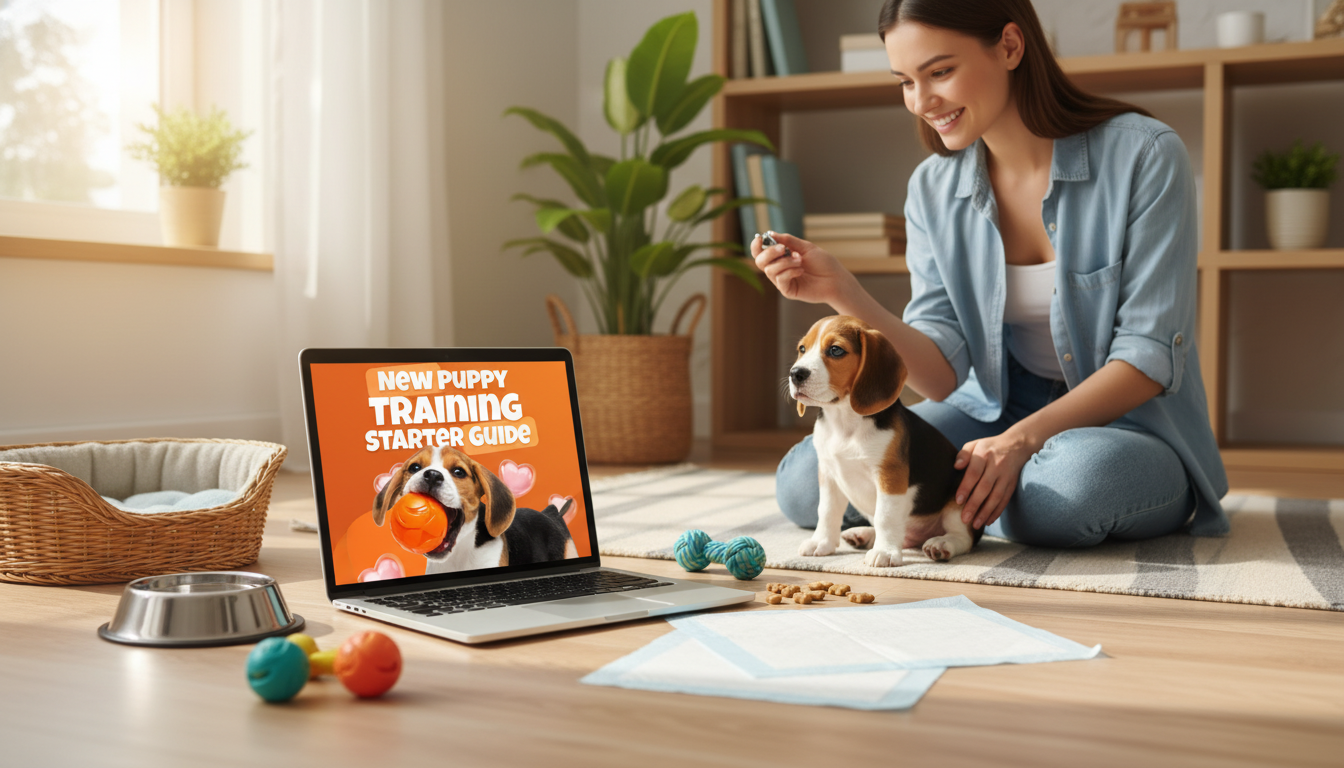
New Puppy Training Starter Guide: A 4-Week Routine for House-Training, Basic Commands, and Socialization
A new puppy learns fastest with predictable routines, clear rewards, and short practice sessions that fit into everyday life. This starter guide lays out a simple 4-week plan for house-training, foundational cues, bite inhibition, and early socialization—plus a printable-friendly structure that helps every caregiver stay consistent.
What to Prepare Before Training Starts
Starting with the right setup reduces accidents, prevents chaos, and makes it easier to reward the behaviors you want.
- Set up a safe home base: crate or pen, washable bedding, and a quiet location away from constant traffic.
- Choose rewards: tiny soft treats, a favorite toy, and calm praise; reserve high-value treats for harder moments like outdoor potty.
- Pick a consistent potty spot and a realistic schedule for wake-ups, meals, and outings.
- Decide on household rules early (furniture access, sleeping location, off-limits rooms) to avoid mixed messages.
- Keep sessions short: 1–3 minutes for skills, multiple times per day, ending before the puppy loses interest.
Starter Supplies Checklist
| Category | What to Get | Why It Helps |
|---|---|---|
| Management | Crate or playpen, baby gates | Prevents rehearsing accidents and chewing habits |
| Training rewards | Small treats, treat pouch | Makes timing and reinforcement consistent |
| Walking gear | Flat collar/harness, leash | Supports calm handling and early leash skills |
| Potty support | Enzymatic cleaner, paper towels | Removes odor cues that can trigger repeat accidents |
| Enrichment | Food puzzles, safe chew items | Reduces boredom and supports bite inhibition |
How Puppies Learn: Simple Rules That Make Training Work
- Reinforce what is wanted: reward immediately after the behavior to help the puppy connect action and outcome.
- Prevent mistakes: supervision, confinement, and structured play reduce chances to practice unwanted behaviors.
- Be consistent with cues and criteria: use one word per behavior (e.g., “Sit”), and reward the same outcome each time.
- Focus on calm repetitions: avoid long drilling; frequent micro-sessions build faster progress.
- Handle setbacks as information: accidents and nipping often signal schedule gaps, overstimulation, or too much freedom too soon.
Week 1: Settle In, Potty Rhythm, Name Game, and Gentle Handling
- House-training foundation: take the puppy out after waking, after eating/drinking, after play, and at least every 1–2 hours at first.
- One cue, instant payoff: use one potty cue and reward outdoors immediately after finishing; keep it boring until the puppy goes, then celebrate.
- Start crate comfort: feed meals in/near the crate, toss treats inside, and build brief “door closed” moments gradually.
- Name recognition: say the name once, reward eye contact, repeat in different rooms so it works everywhere.
- Handling practice: touch paws/ears/collar briefly, reward, and stop before the puppy struggles; pair grooming tools with treats.
If you want a simple routine you can print and post on the fridge, the New Puppy Training Starter Guide (printable 4-week routine) is designed for quick daily check-ins and consistency across caregivers.
Week 2: Sit, Down, Come (Tiny Distances), and Leash Basics Indoors
- Teach sit and down with luring and a marker word (e.g., “Yes”) or clicker; reward quickly and release.
- Start recall games: “Come” from 3–6 feet, enthusiastic tone, reward heavily, then let the puppy go again to avoid making it “the end of fun.”
- Introduce leash pressure softly: reward when the puppy moves toward you; avoid yanking or dragging.
- Build alone-time skills: very short departures paired with a chew or food toy to prevent separation distress patterns.
- Increase freedom slowly: one new room at a time only after several accident-free days with supervision.
For extra structure, pick two training windows (for example: right after the morning potty, and after the evening meal) and keep them short enough that the puppy finishes wanting more.
Week 3: Leave It, Drop It, Bite Inhibition, and Calm Greetings
If your puppy gets extra wiggly when guests arrive, it helps to coach the humans too: calm voices, slow petting, and rewarding “sit” instead of excited squealing. For households that like clear expectations for visitors, a simple etiquette refresher can help everyone stay consistent, such as the Modern Etiquette Micro-Course (handy for setting “greet calmly” house rules).
Week 4: Socialization Plan, Real-World Practice, and House-Training Proofing
For socialization guidance grounded in behavior science, see the American Veterinary Society of Animal Behavior (AVSAB) Position Statement on Puppy Socialization. For additional training and house-training references, the American Kennel Club: Puppy Training Basics and the Humane Society of the United States: House Training Your Puppy are also helpful.
Common Setbacks and Quick Fixes
A Printable Routine That Keeps Everyone Consistent
FAQ
How often should a new puppy go outside for potty training?
Most puppies do best going out after waking, after meals/drinks, after play, and about every 1–2 hours at the start. If you notice sniffing, circling, suddenly wandering away, or a quick squat, go out immediately. Once you get several days of success, extend the interval gradually (10–15 minutes at a time) rather than making a big jump.
What are the first commands to teach a puppy?
Start with name recognition, sit, down, and come (from short distances) because they’re practical for safety and everyday handling. Add “leave it”/“drop it” to prevent resource conflicts and dangerous grabbing, and teach a brief calm settle so your puppy can relax around normal household activity.
How can a puppy be socialized safely?
Use positive, gradual exposure: pair new people, surfaces, sounds, and environments with treats at a distance where your puppy stays relaxed. Keep experiences short and upbeat, avoid forced greetings, and ask your veterinarian how to balance low-risk outings with your puppy’s vaccination plan.









Leave a comment