Calm Your Mind: Guided Meditation Audio for Anxiety
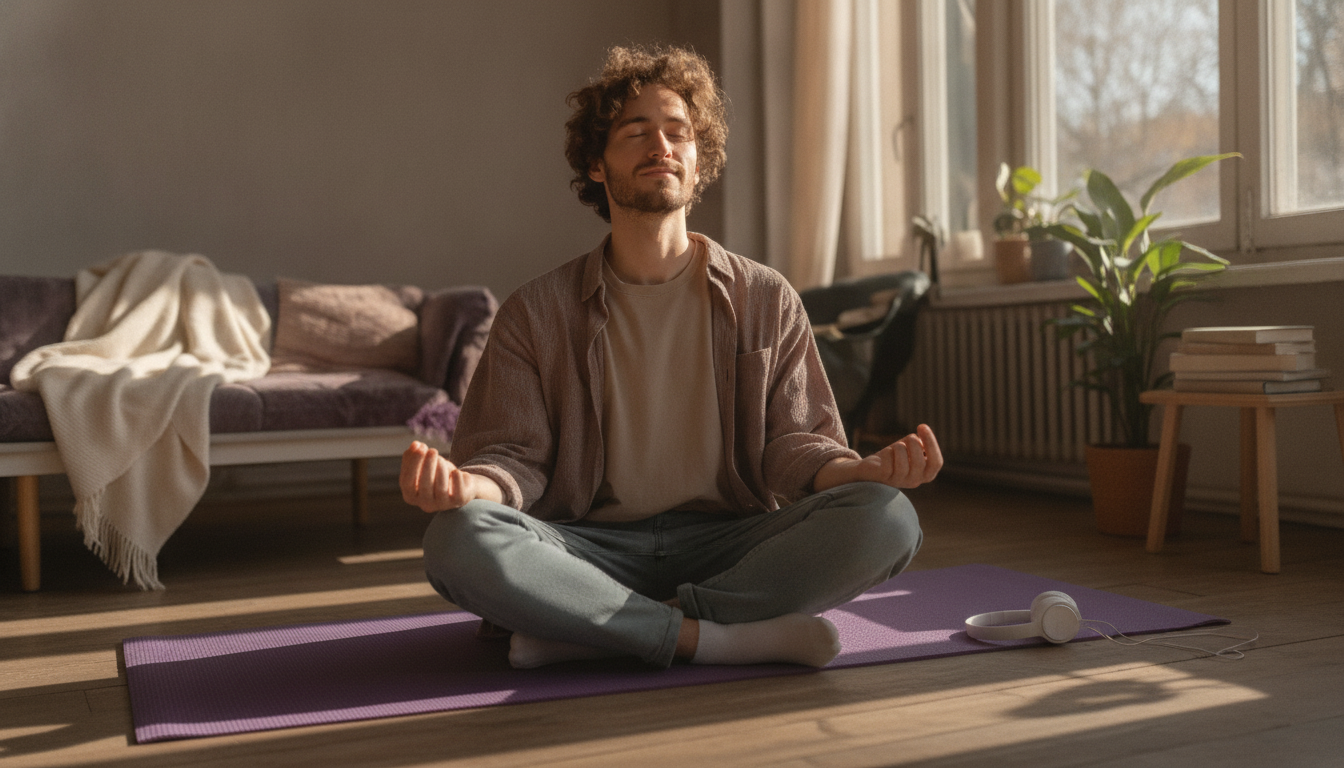
Calm Your Mind: A Guided Meditation Audio Course for Anxiety Relief and Everyday Stress
A racing mind can show up as worry loops, tense shoulders, shallow breathing, and trouble falling asleep. Guided meditation offers a simple structure: a calm voice, a clear focus, and a steady pace that makes it easier to settle—especially when anxiety makes “just relax” feel impossible. This guide explains how an audio-based guided meditation series can help, what to expect from a consistent practice, and how to start in a way that feels realistic on busy days.
What it feels like when the mind won’t slow down
When stress stays “on,” the mind often runs ahead of the moment. Common signs include persistent overthinking, irritability, difficulty concentrating, and a constant sense of being on edge—even when nothing urgent is happening.
That mental noise is frequently paired with physical stress activation: a tight jaw, rapid heartbeat, shallow breath, chest tightness, stomach flutter, or a knot between the shoulder blades. You might notice the body bracing before the mind even catches up.
Trying to force calm can backfire. The more you demand silence from your thoughts, the more frustrated (and alert) you may feel. A structured practice tends to work better because it gently redirects attention rather than requiring your mind to go blank.
When anxiety is frequent, a short, repeatable routine often helps more than occasional long sessions. Think “daily reps” for your nervous system: brief practice that teaches your body what “downshift” feels like.
Why guided meditation can help with anxiety
Guided meditation can feel supportive when anxiety makes decision-making harder. Instead of trying to figure out what to do (“Am I breathing right?” “Should I visualize something?”), you follow prompts—breath cues, a body scan, or simple noticing of thoughts.
A steady voice and pacing can also encourage slower breathing and softer muscle tension. Over time, this can make it easier to access a calmer state on purpose, rather than waiting for stress to pass on its own.
Just as important, meditation builds skills: noticing thoughts, labeling them, and returning attention without self-criticism. The goal isn’t to never think—it’s to recognize when you’ve been pulled into rumination and to practice coming back.
Audio sessions are portable and consistent. They can fit into bedtime, work breaks, commuting (not while driving), or a post-stress recovery window. For an overview of effectiveness and safety, see resources from NCCIH, the American Psychological Association, and Mayo Clinic.
What’s inside “Calm Your Mind: Guided Meditation Series” (audio course)
Calm Your Mind: Guided Meditation Series | Audio Course | Anxiety Relief Meditation is designed as a structured series—so you’re not relying on one-off tracks when anxiety changes day to day. Instead, you get repeatable sessions you can return to, building familiarity with the same calming pathway.
It works well for beginners because each session offers direction and an easy “return point” (breath, body sensations, or sound). If you drift into planning or worry, you’re guided back—without needing to solve the problem in your head first.
Listening is flexible: use headphones when you want stronger focus, or play it softly on a speaker for a gentler experience. Many people find that consistency matters most—short daily sessions can create a dependable “calm-down” cue over time.
Product details: Digital audio course, $28.99 USD, in stock.
Quick course-fit checklist
| Need | What to listen for | How this kind of series helps |
|---|---|---|
| Trouble falling asleep | Slow pacing, body relaxation, gentle reminders | Supports wind-down and reduces mental looping |
| Daytime anxiety spikes | Short grounding prompts, breath cues | Creates a quick reset routine |
| Overthinking | Noting thoughts, returning attention | Builds skill in stepping out of rumination |
| Tension in the body | Body scan, progressive relaxation | Encourages release of stress-held muscle patterns |
A simple routine to calm your mind (5–15 minutes)
1) Pick a consistent cue. Tie your session to something you already do: after brushing your teeth, before the first meeting, or right after lunch. Consistency reduces friction and turns meditation into a habit rather than a decision.
2) Start with a realistic minimum. Five minutes daily can be more stabilizing than 30 minutes once a week—especially when anxiety shows up often.
3) Choose an easy posture. Sit with feet grounded if you want to stay alert, or lie down if your goal is sleep. Soften the jaw, drop the shoulders, and let the belly move naturally with each breath.
4) Return gently when the mind wanders. Notice the thought, label it (“planning,” “worry,” “replaying”), then come back to breath or body sensations. The return is the practice.
5) Transition out on purpose. Open your eyes slowly, feel your hands and feet, and choose one small next action: drink water, stretch, or take a short walk to carry calm into the next moment.
When meditation feels hard: common obstacles and fixes
“My mind is too busy.” That’s a normal starting point. Use the guidance as a track to return to, not a test to pass. Even 60 seconds of returning attention is meaningful practice.
“I get restless.” Try shorter sessions, keep your eyes slightly open, or switch to seated meditation instead of lying down. A little physical stability (feet on the floor, hands resting) can reduce fidgety energy.
Making the calm last: pairing meditation with supportive habits
Extra support for stressful seasons: If travel, new environments, or social pressure amplify anxiety, practical preparation can reduce mental load. For travel-related stress and smoother interactions, consider The Smart Traveler’s Guide to Global Etiquette | Digital Download eBook for Cultural Tips, Travel Etiquette, and International Manners.
FAQ
How can I calm my mind?
Ground through your senses (feel your feet, notice 3 sounds), soften your jaw and shoulders, and slow your breathing without forcing it. Then use a short guided meditation to redirect attention when thoughts pull you away; consistency and a gentle return matter more than “clearing” your mind.












Leave a comment