Break the Tension: 2-Minute Stress Relief You Can Use
Break the Tension: Fast Stress Relief You Can Do in Real Life
Stress often shows up as tight shoulders, a busy mind, shallow breathing, and a nagging sense of being behind. The good news: small, repeatable techniques can interrupt that spiral in minutes—especially when they combine body cues (breath and grounding) with practical structure (time boundaries). The strategies below are designed to work at a desk, in traffic, between meetings, or before sleep.
What “breaking the tension” looks like in the body and mind
Tension is a protective response. When the brain senses pressure or threat, muscles brace, breathing shortens, and attention narrows toward whatever feels urgent. That can be helpful in short bursts—but exhausting when it becomes the default.
- Common physical signals: clenched jaw, tight neck/shoulders, shallow breathing, upset stomach, headaches, restless legs.
- Common mental/emotional signals: irritability, racing thoughts, difficulty prioritizing, looping worries, feeling “behind” even when working hard.
The goal for quick relief isn’t to force calm—it’s to nudge the nervous system from “gear up” to “settle down” using simple inputs: breath, posture, sensation, and one clear next action. For an overview of how stress affects the body and behavior, the American Psychological Association’s stress resources are a solid reference point.
A 2-minute reset: the fastest sequence to run anywhere
If you only remember one method, make it this. It’s short enough to do without anyone noticing, and structured enough to keep the mind from bargaining (“I don’t have time”).
- 20 seconds: Drop your shoulders. Unclench the tongue from the roof of the mouth. Soften the brow.
- 60 seconds: Breathe in through the nose for 4, out for 6. Repeat for 6 slow breaths (the longer exhale is the key).
- 30 seconds: Name 5 things you see, 4 things you feel, 3 things you hear.
- 10 seconds: Choose one next action that takes under 5 minutes (send one email, open the doc, refill water, schedule the call).
That last step matters because it converts vague pressure into a concrete finish line—your brain relaxes when the “what now?” question has an answer.
Breathing exercises that downshift stress quickly
Breath is one of the fastest levers for changing your state because it’s both automatic and controllable. If you’re new to breathwork, keep it gentle and prioritize comfort. The NHS breathing exercises guide is a helpful primer.
- Extended exhale breathing (4 in / 6 out): encourages a calmer rhythm and can reduce that stressed “air hunger” feeling.
- Box breathing (4-4-4-4): useful before presentations, calls, or difficult conversations when you want steadiness and focus.
- Physiological sigh (2 inhales + long exhale): great for sudden spikes—like an unexpected email, near-miss in traffic, or a sharp comment.
- Tip: Keep shoulders relaxed and jaw loose. If you feel dizzy, return to normal breathing and slow the pace.
Quick breathing options by situation
| Technique | How long | Best for | How to do it |
|---|---|---|---|
| Extended exhale (4/6) | 1–3 min | General tension, overthinking | Inhale 4, exhale 6 through the nose; repeat |
| Box breathing (4-4-4-4) | 2–4 min | Focus before a task | Inhale 4, hold 4, exhale 4, hold 4; repeat |
| Physiological sigh | 20–60 sec | Sudden stress spike | Inhale, quick top-up inhale, long slow exhale; repeat 1–3x |
| Nasal breathing only | 2–5 min | Calm baseline maintenance | Gentle nose-only breathing; lengthen exhale slightly |
Quick meditations for busy moments (1–7 minutes)
Mini-meditations aren’t about emptying your mind. They’re about shifting from “stuck in thoughts” to “back in the moment.” For effectiveness and safety notes, see the NCCIH overview of meditation and mindfulness.
- One-minute “label and release”: silently name what’s present (“worrying,” “planning,” “tension”), then return attention to the breath.
- Three-minute body scan: notice forehead, jaw, shoulders, chest, belly; soften each area on the exhale.
- Five-minute timed sit: set a timer; count exhalations from 1 to 10, then restart at 1. If distracted, gently return to 1.
- Walking reset (2–5 minutes): match breath to steps (inhale for 3 steps, exhale for 4) while noticing contact with the ground.
Grounding techniques that work when the mind won’t slow down
Grounding brings attention out of the thought stream and back into sensation. It’s especially useful when you’re too activated to “think your way” into calm.
- 5–4–3–2–1 senses check: 5 things seen, 4 felt, 3 heard, 2 smelled, 1 tasted.
- Temperature shift: hold a cool drink or splash cool water on wrists for a fast sensory change.
- Pressure grounding: press feet into the floor for 10 seconds, release for 10; repeat 3 times.
- Object focus: hold a small item (key, stone) and describe it mentally—shape, edges, temperature, texture.
Time management tips that prevent stress from rebuilding
Fast relief is powerful, but boundaries and planning keep tension from snapping back an hour later. Think of this as “stress-proofing” your day.
A simple weekly routine to build resilience
When quick techniques aren’t enough
A guided toolkit to keep on hand
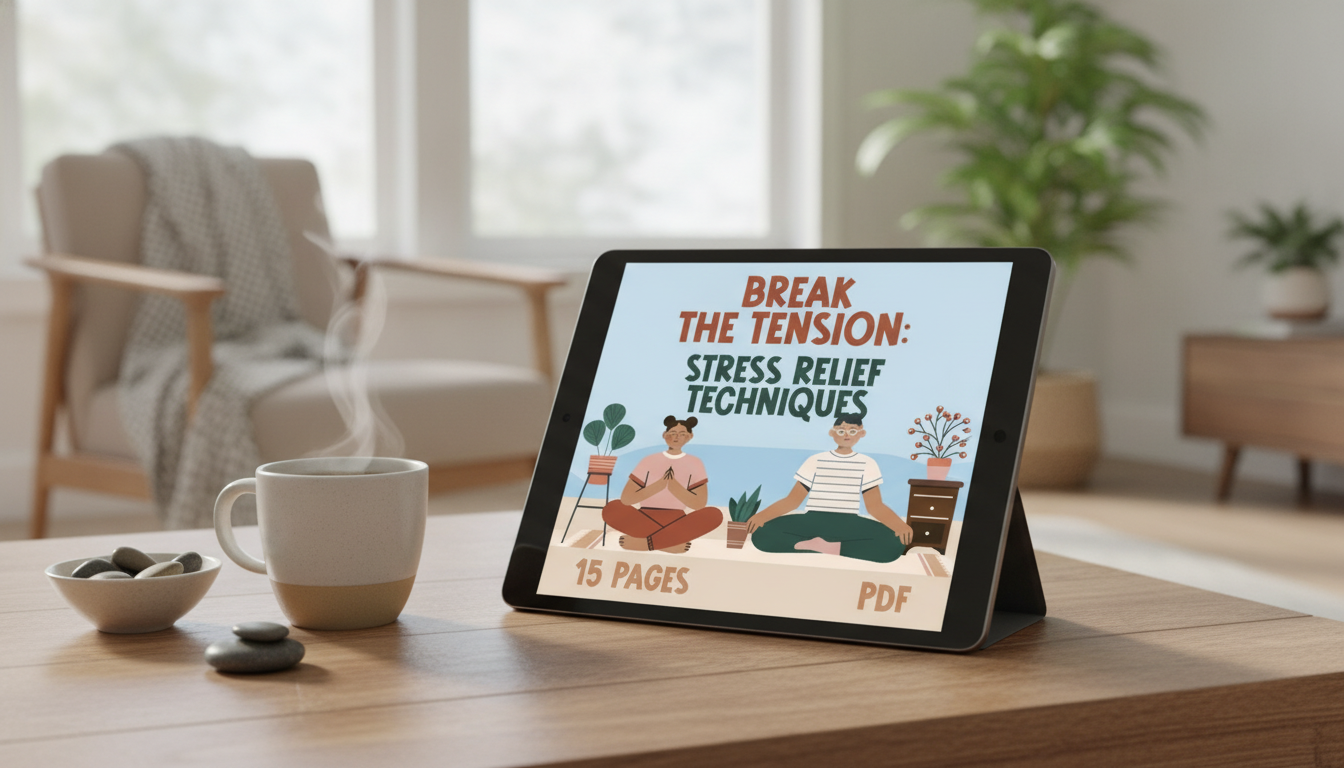
If you want a structured set of breathwork, mini-meditations, grounding practices, and practical planning prompts, keep Break the Tension: Stress Relief Techniques – Breathing Exercises, Quick Meditations, Grounding Techniques, and Time Management Tips to Reduce Stress on your phone or tablet for quick reference during high-pressure moments.
For other life scenarios where clear structure can reduce background stress, consider saving these digital guides as well: The Smart Traveler’s Guide to Global Etiquette, Online-Dating Profile Blueprint, and New Puppy Training Starter Guide.
FAQ
What does break up tension mean?
It means interrupting the stress loop where the body braces (tight muscles, shallow breath) and the mind narrows (worry, urgency). You “break it up” by adding calming inputs—like a longer exhale, grounding through the senses, brief movement—and then choosing one clear next step so your system stops bracing.










Leave a comment